Shipping efficiently starts with knowing your package’s weight and dimensions. But what if you don’t have a shipping scale on hand?
Whether you’re preparing a package at home or need a quick estimate before buying a shipping label, there are several practical ways to get the information you need.
In this guide, we’ll cover 5 practical ways to weigh a package without a scale, including options you can use at home and places where you can get an accurate weight before shipping.
How to Estimate Package Weight Without a Scale
The right method depends mostly on the size and weight of your package.
| Method | Best for | What to keep in mind |
|---|---|---|
| Kitchen scale | Envelopes and small packages | Check the scale's maximum capacity |
| Bathroom scale | Larger, heavier boxes | Not precise enough for very light packages |
| Luggage scale | Medium-size packages | The package needs to be safely lifted or suspended |
| Known item weights | Repeat products or familiar items | Include packaging weight |
| USPS or a shipping counter | When you need a real weight | Availability and services vary by location |
1. Use a Kitchen Scale for Small Packages
If your package fits on a kitchen scale and stays within its weight limit, this is one of the easiest options.
Place the fully packed item on the scale and record the weight. A kitchen scale is particularly useful for lightweight shipments because it can usually show smaller increments than a bathroom scale.
This also makes it a better option for padded mailers, small boxes, clothing, accessories, and other lightweight items where a few ounces can matter.
2. Use the Bathroom Scale Method
For a box that's too large for a kitchen scale, try the weigh-yourself-twice method:
- Weigh yourself without the package.
- Weigh yourself again while holding the package.
- Subtract your weight from the combined weight.
For example, if you weigh 160 lb alone and 168 lb while holding the box, the package weighs approximately 8 lb.
This works better for heavier packages. Bathroom scales are generally not sensitive enough to give you a useful reading for a lightweight envelope or small parcel.
3. Try a Luggage Scale
If you already own a luggage scale, it can also work for packages that can be safely lifted. Attach the package securely, using a bag or handle if necessary, and lift it according to the scale's instructions.
This can be useful when the box is awkward to place on a bathroom scale but still light enough to lift comfortably. As with any household method, check the scale's capacity before using it.
4. Add Up Known Item Weights
No scale of any kind? If you know what's inside the package, look for the manufacturer's listed weight for each item and add them together. Then remember to account for:
- The box or mailer
- Packing material
- Tape
- Inserts or printed materials
This works best for businesses that regularly ship the same products in the same packaging. Once you've had one completed package weighed accurately, you can keep that number as a reference for similar future shipments.
For a one-off package, treat this as an estimate rather than an exact measurement.
5. Have the Package Weighed Before You Ship
If accuracy matters and you don't have access to any type of scale, getting the package weighed in person is the safest option.
USPS says its Self-Service Kiosks can weigh packages, and a retail associate will also weigh your package when you purchase postage at a Post Office counter.
FedEx Office and other staffed shipping locations also have equipment used to prepare shipments, although the services available at each location can vary.
Why Estimating Weight Without a Scale Can Be Risky
Manual estimation becomes problematic once a package enters the shipping process. Tools like postage weight calculators require exact inputs and dimensions. Slight inaccuracies in estimations can lead to:
- Unexpected carrier surcharges
- Delivery delays
- Increased operational costs
Additionally, traditional postage meters are cumbersome, expensive, and challenging to maintain. Their limited flexibility makes them unsuitable for modern shipping needs, prompting many to shift towards more streamlined AI solutions.
Where Can I Weigh a Package for Free?
A USPS Self-Service Kiosk is one place to check if you don't have a scale at home. USPS lists package weighing as one of the services available at its kiosks. At the retail counter, a USPS associate will also weigh your package when you're purchasing postage.
You may also be able to get a package weighed as part of the shipping process at other carrier locations, but services and fees can vary by location, so check before making a special trip.
Can You Measure a Package With Your Phone?
For dimensions, yes. For actual weight, no. Some phones can use their camera to estimate the size of an object. For example, Apple's Measure app can automatically detect rectangular objects and estimate their dimensions.
Apple also notes that these measurements are approximate, so a tape measure is still the better option when you need dimensions for a shipping label.
Phone-based measurement tools can be useful when you don't have a ruler nearby, but they shouldn't be confused with weighing the package.
Alternative Solution: Estimate Package Weight Using AI
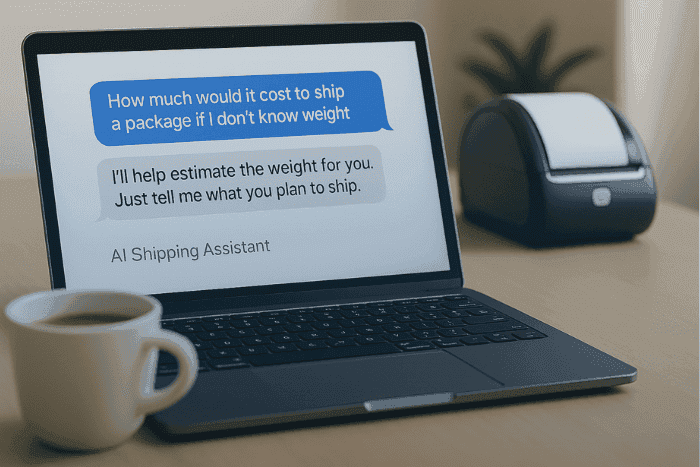
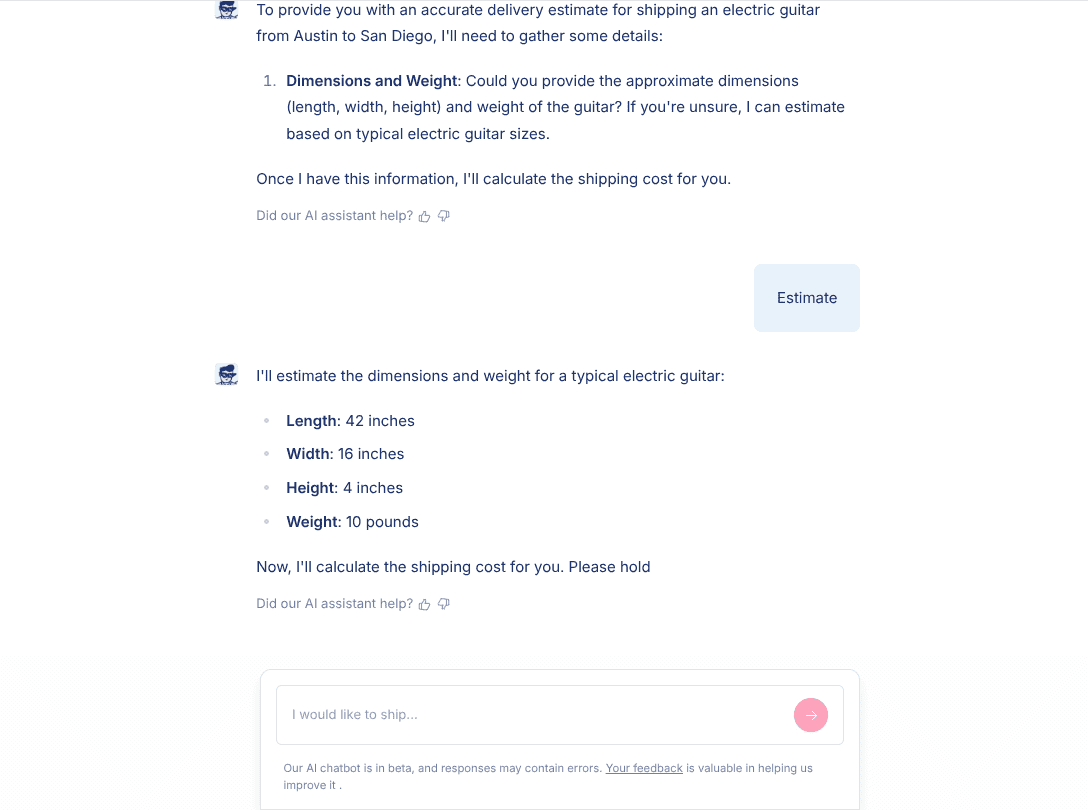
If you don't have access to a scale and need a quick starting point, AI can help estimate package weight and dimensions based on what you're shipping.
The Airpals AI Shipping Assistant lets you describe your item in conversational language and uses that information to estimate the package details needed to compare shipping options.
Instead of starting from a completely random guess, you can provide information such as the type of item, approximate size, quantity, and packaging. It uses advanced data and conversational prompts to do the heavy lifting for you.
- Accurate weight and dimension estimates: Just describe your package, no need for a scale or lengthy forms. The AI Shipping Assistant draws from thousands of real-world shipping data points to instantly calculate your package’s weight and dimensions.
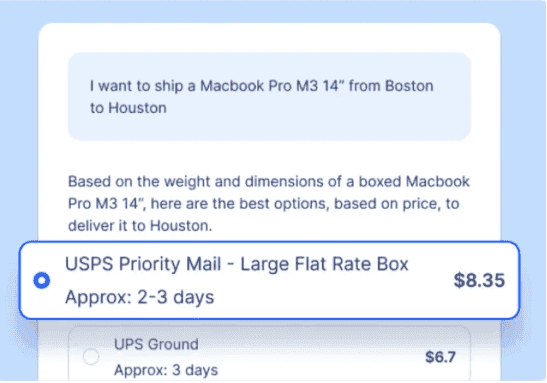
- Real-time shipping rate comparisons: Once you have the estimated weight and dimensions for your package, the AI Shipping Assistant shows you live rates from top carriers like UPS, USPS, and FedEx. No more bouncing between platforms or endless open tabs.
- Best AI tool to use: From small businesses to logistics teams and even everyday shippers, this intuitive tool is designed for anyone who wants to ship confidently and cost-effectively. It’s the perfect AI tool for business or personal use, eliminating the stress of manual weight estimation.
Create Shipping Labels with Our AI Shipping Assistant
Once you have your package’s estimated weight and dimensions, the AI Shipping Assistant takes things even further: it helps you generate shipping labels in just a few clicks. There’s no need to jump from one carrier website to another. Everything happens on one easy-to-use platform.
You’ll see real-time shipping rates from top carriers like UPS, USPS, and FedEx, so you can confidently choose the best option for your shipment. Then, simply print your label and you’re ready to go. It’s a smooth, efficient process that saves you time and eliminates the usual shipping stress.
Key Takeaways
- You don’t need a dedicated shipping scale to estimate package weight. A kitchen scale, bathroom scale, luggage scale, or known item weights can all help depending on the package.
- Weigh the fully packed shipment whenever possible. The box, tape, padding, and inserts all add to the final shipping weight.
- Weight and dimensions both matter. Carriers may use dimensional weight when calculating shipping charges, so measure the finished package as well.
- If you can’t get a reliable weight at home, use a carrier location or USPS Self-Service Kiosk before shipping.
- AI shipping tools can provide useful weight and dimension estimates when a scale isn’t available, helping you move faster from package details to rate comparison and label creation.
Conclusion: Estimate Package Weight Without Guesswork
Traditional methods such as guessing weights or relying on outdated postage meters no longer suffice in our evolving shipping environment.
From accurate weight estimation to seamless shipping label creation, the AI Shipping Assistant optimizes the entire shipping process, benefiting everyone from individual shippers to high-volume logistics teams.
Say goodbye to guesswork and manual weight estimations. Experience the revolutionary convenience of our AI-powered Shipping Assistant today, free of charge. Simplify your shipping, save time, and optimize your logistics effortlessly.
Frequently Asked Questions about Measuring Weight Without a Scale
How Can I Weigh a Package at Home Without a Scale?
You can weigh a package at home without using a shipping scale by using a kitchen scale for smaller parcels, a bathroom scale for heavier boxes, or a luggage scale. With a bathroom scale, weigh yourself first, then weigh yourself while holding the package and subtract the difference.
Where Can I Weigh a Package for Free?
You can weigh a package for free at a USPS Self-Service Kiosk. USPS retail associates can also weigh your package when you purchase postage at the counter. Other shipping locations may have scales available, but their policies can vary.
Can I Use a Kitchen Scale to Weigh Packages?
Yes, you can use a kitchen scale to weigh packages as long as the parcel fits on the scale and stays within its maximum capacity. Kitchen scales work especially well for lightweight packages and envelopes because they can measure smaller weight increments.
How Do I Weigh an Envelope for Postage Without a Scale?
You can weigh an envelope for postage without a shipping scale by using a kitchen scale, which is better suited to lightweight mail than most bathroom scales. If you do not have one available, you can take the envelope to a USPS retail counter or Self-Service Kiosk.
Can I Create a Shipping Label Without Knowing the Exact Weight?
You can create a shipping label using an estimated weight, but the package information should be as accurate as possible. Carriers may verify the actual weight and dimensions, and incorrect information can result in an adjusted shipping charge.
How Accurate Are AI Tools for Estimating Package Weight?
AI tools can provide useful weight and dimension estimates based on the package information you provide, making them a convenient option when you don't have a scale available. Providing more specific details about the item, quantity, packaging, and approximate size can help improve the estimate.