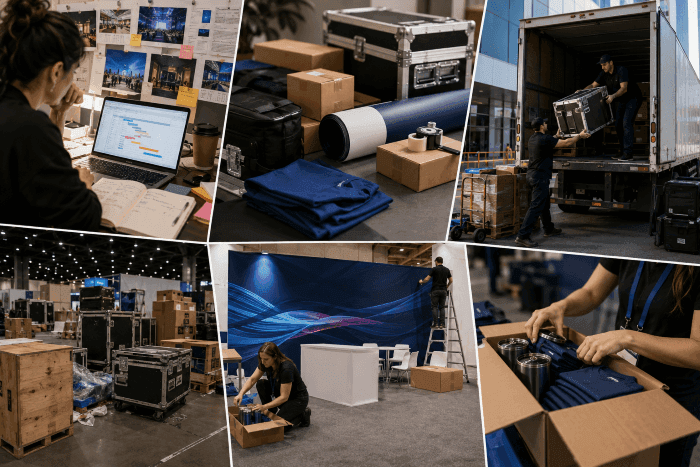
Planning an experiential marketing activation takes more than a creative concept. From coordinating vendors and production schedules to ensuring materials arrive on time, every detail plays a role in bringing the experience to life.
A successful experiential marketing activation gives people something to do with a brand, not just something to look at. Making that happen requires clear goals, audience research, budgeting, staffing, and on-site coordination. This guide covers the key steps involved in planning an activation, from developing the experience to managing its execution.
Table of Contents:
- What Is an Experiential Marketing Activation?
- Defining the Goal and Audience Before You Build the Experiential Activation
- The Key Planning Decisions Behind an Experiential Marketing Event
- 3 Experiential Marketing Examples and How to Plan Them
- Managing Logistics for Experiential Activations
- How to Measure Your Experiential Marketing Strategies
- Key Takeaways
- Conclusion: Bringing Your Experiential Marketing Activation to Life
- Frequently Asked Questions (FAQs)
What Is an Experiential Marketing Activation?
An experiential marketing activation is a brand experience designed to encourage direct participation rather than passive exposure to advertising. Instead of simply seeing a message, people can interact with a product, explore a brand, or participate in an activity that creates a more memorable connection.
Formats range from pop-ups and sampling to demonstrations, immersive installations, and tours. These experiential activations vary in scale, but visitors need a reason to engage.
A crowd taking pictures is nice. A crowd trying the product, understanding it, or remembering why it matters is closer to the point. If someone asks, "What is experiential marketing supposed to achieve?" then "a great photo opportunity" shouldn't be the only answer.
Defining the Goal and Audience Before You Build the Experiential Activation
Before discussing sets or interactive screens, define what success looks like. Are you trying to build brand awareness, encourage product trials, generate qualified leads, or strengthen customer loyalty? Different experiential marketing campaigns require different goals and ways to measure results.
A beverage campaign might aim for 2,000 product trials, a private launch for 40 buyer conversations, or a touring activation for consistent reach across five markets. Each objective calls for different budgets, staffing, and production requirements.
Start with the goal and design backward. This helps narrow down experiential marketing ideas based on what the audience needs to do, rather than which concept looks best on a slide.
| Campaign Goal | Suitable Format | What Needs the Most Attention |
|---|---|---|
| Awareness | Pop-up or installation | Foot traffic, accessibility, and a short, clear interaction |
| Product trials | Sampling or demonstration | Staff capacity, stock levels, and replenishment |
| Relationship building | VIP event or workshop | Time for conversations and thoughtful follow-up |
Mapping the Audience to the Right Type of Activation
A B2B executive at a conference may prefer a quiet product demonstration, while a festivalgoer with ten minutes before the next concert might engage with a quick challenge or sample. The same experience won't necessarily work for both audiences.
Match the activation format to the audience's available time, setting, and motivation. The best experiential marketing activations don't demand attention; they make participation feel worthwhile.
The Key Planning Decisions Behind an Experiential Marketing Event
Planning experiential marketing events involves turning a creative concept into an experience that works in practice. From choosing the right venue to coordinating vendors and preparing materials, each decision affects how smoothly the activation runs.
Develop the Experience
Map what participants will see, do, and take away from the experience. Make sure each interaction supports the campaign's objectives and gives visitors a clear reason to engage.
Walk through the experience as a guest: Where do they enter? What happens when six people arrive together? Can everyone participate?
Test the concept against actual behavior. A demonstration loses its appeal if everyone needs five minutes of instructions. Treat the staff script and the queue as part of the design. Sometimes the best improvement is a shorter wait or a clearer introduction.
Choose the Location and Budget
The right location depends on your audience, campaign goals, and available resources. Beyond foot traffic, check power availability, weather exposure, loading access, storage, noise restrictions, and setup time.
Public-space activations may require permits. For example, New York City's Street Activity Permit Office handles commercial and promotional events in many street and sidewalk locations.
Build a budget that accounts for venue rental, permits, fabrication, staffing, equipment, samples, transportation, insurance, contingencies, and teardown. A beautiful space is wasted if there isn't enough budget to staff and operate it properly.
Plan accessibility early. The ADA National Network's temporary-event planning guide covers accessible routes, participation, signage, and staff preparation.
Coordinate Vendors and Production
The designer approves artwork while the fabricator awaits dimensions, the printer needs a final file, and the venue wants a load-in schedule. Everyone can be busy and still work from different plans.
Use one production calendar with clear owners, dependencies, approval deadlines, and final specifications. Include agencies, suppliers, the venue, and the staffing lead.
A short check-in before launch can prevent last-minute confusion and ensure everyone is working from the same approved materials and schedule.
Prepare Your Activation Materials
List all the materials needed for the activation, including product samples, displays, signage, furniture, devices, cables, promotional items, cleaning supplies, and backups. Identify what is reusable, needs replenishment, or can be replaced locally.
Label crates by setup zone. A box marked "Campaign Launch" tells the team little when there are twenty of them.
Keep a basic chain of custody for materials: who released them, who received them, and what arrived usable. This helps teams identify missing or damaged items before they affect the activation.
Plan for On-Site Execution
Create a run of show covering load-in, installation, testing, staff briefings, breaks, restocking, and breakdown. Assign an on-site decision-maker and a staff lead so responsibilities are clear when unexpected situations arise.
Before opening, test devices, queue flow, signage, sample quantities, and accessibility. Prepare contingency plans for weather changes, equipment failures, staffing absences, and unexpectedly popular giveaways.
During live experiential activations, adaptability matters as much as planning.
3 Experiential Marketing Examples and How to Plan Them
The following three hypothetical experiential marketing examples show how different activation formats require different approaches to planning, coordination, and on-site execution.
One-Day Pop-Up: Make the First Hour Count
A skincare brand rents a storefront for consultations. It prioritizes conversations over foot traffic, so it needs trained advisors, appointment slots, product samples, and consent-based follow-ups.
Rehearse the setup and inspect displays the night before. Confirm that staff, equipment, and materials are ready before opening, and keep spare signage and samples nearby. Losing the first hour is costly when the entire event lasts one day.
Multi-Location Sampling Campaign: Consistency Is the Challenge
A snack brand distributes product samples at four commuter hubs. Each location needs a standardized kit, local staff, replenishment targets, and a designated inventory contact.
Track sample distribution and feedback at each site, along with stock levels throughout the day. A station that runs out of samples by noon may be highly successful or simply understocked. Shared reporting and planned restocking help teams identify the difference and maintain a consistent experience across locations.
Touring Brand Activation: Build Something That Travels Well
A technology brand takes an interactive product demonstration to five cities. Its display must withstand repeated assembly, transportation, and breakdown without compromising the visitor experience.
Number components, photograph each setup, and inspect equipment between stops. Standardize the display and setup instructions, but account for local permits, loading restrictions, and staffing requirements in each city. A reusable activation kit can simplify preparation while helping teams maintain consistency throughout the tour.
Managing Logistics for Experiential Activations
The plan determines what moves, when, and between whom. Displays travel from fabricators to storage facilities and venues; samples arrive separately; and a print shop may still be finishing revised signs during setup.
Keeping track of material availability, delivery windows, receiving contacts, and expenses helps marketing and production teams stay organized. For agencies managing multiple campaigns or activation sites, reliable delivery coordination is essential to keeping everything on schedule.
Airpals' same-day courier services help marketing, PR, and production teams coordinate both scheduled and on-demand deliveries through features such as:
- Scheduled deliveries: Book pickups and deliveries in advance to align with production timelines and event schedules
- Multi-stop routes: Coordinate multiple pickups and drop-offs within a single delivery route
- Bulk deliveries: Coordinate bulk deliveries for events and samples, including high-volume shipments that may require vans or trucks
- Real-time tracking: Monitor delivery progress and share tracking links with team members or recipients
These capabilities help teams improve visibility, reduce manual coordination, and manage deliveries across vendors, venues, and campaign locations without relying on multiple courier providers.
How to Measure Your Experiential Marketing Strategies
For experiential marketing events, the KPIs should reflect the campaign's original objectives, not just the biggest numbers in the recap. Attendance measures reach, while product trials, qualified leads, conversations, redemptions, and conversions provide a clearer picture of audience engagement and campaign results.
Use unique QR codes, consent-based forms, or dedicated landing pages to connect participation with digital outcomes. Google's campaign URL builder can help create tagged links to track website traffic generated by different activation locations or activities.
Measure operational performance too. Track on-time setup, equipment uptime, stockouts, waiting times, staffing coverage, and unplanned spending. These metrics help explain why two locations running the same experiential marketing campaign may achieve different results.
By evaluating both audience outcomes and execution, teams can identify what worked, understand where improvements are needed, and make better decisions for future experiential marketing strategies.
Key Takeaways
- Define your campaign goals and audience before choosing an activation format
- Walk the visitor journey, including waiting, accessibility, and departure
- Give vendors one approved specification and clear deadlines
- Count materials, identify restock triggers, and coordinate delivery schedules
- Report audience outcomes alongside delays, stockouts, and unplanned costs
Conclusion: Bringing Your Experiential Marketing Activation to Life
A successful experiential marketing activation requires more than a strong creative concept. Clear goals, thoughtful planning, and reliable coordination help ensure the experience runs smoothly for both participants and the teams behind it.
From managing vendors and materials to preparing for on-site challenges, every detail contributes to delivering a consistent and memorable brand experience.
For marketing and PR teams coordinating deliveries across activation sites, Airpals' same-day courier services help simplify logistics with scheduled deliveries, multi-stop routes, and real-time tracking.

Frequently Asked Questions (FAQs)
What is an experiential marketing activation?
An experiential marketing activation is a brand experience that encourages direct audience participation through activities such as product demonstrations, sampling, pop-ups, or interactive installations. Unlike traditional advertising, it allows people to engage with a brand firsthand.
What are some examples of experiential marketing activations?
Common experiential marketing examples include product pop-ups, sampling campaigns, immersive installations, and touring demonstrations. Each requires different planning considerations, from staffing and inventory management to venue coordination and transportation.
How do you plan an experiential marketing activation?
Start by defining your audience and campaign goals. Choose an activation format, establish a budget, and coordinate the venue, vendors, staffing, and materials. Prepare a production schedule, assign responsibilities, and plan for unexpected challenges.
How much does an experiential marketing activation cost?
Costs vary depending on location, duration, audience size, and production complexity. Typical expenses include venue rental, staffing, fabrication, equipment, samples, transportation, and permits. Use actual vendor quotes to build a realistic budget.
How do you measure the success of an experiential marketing activation?
Measure success using KPIs aligned with your campaign goals, such as attendance, product trials, qualified leads, and conversions. Also track operational performance, including setup delays, inventory shortages, and unexpected expenses.
What are the most common challenges when planning an experiential marketing activation?
Common challenges include tight production deadlines, vendor miscommunication, venue restrictions, staffing shortages, and missing materials. Clear responsibilities, inventory checks, and contingency plans help teams manage unexpected issues.
How does Airpals support experiential marketing teams during activations?
Airpals' same-day courier services offer scheduled and on-demand deliveries, multi-stop routes, bulk delivery options, and real-time tracking. Airpals Concierge also supports local courier coordination across 100+ U.S. cities, subject to availability.