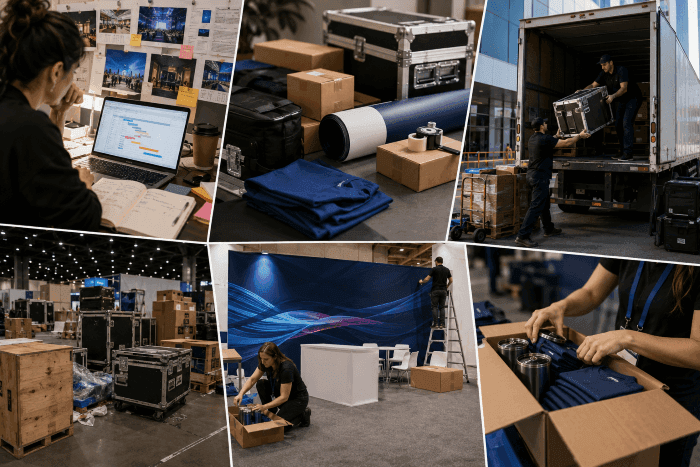
Weeks of planning go into every corporate event or trade show. The venue is booked, the agenda is set, and the team is running around the whole office. But the physical side: getting booth kits, signage, branded merchandise, and equipment into the right city, venue, and room on time, is often left to the last few days, and sometimes even hours.
That's where most event logistics plans fall apart: not in the strategy, but in getting the right materials to the right place at the right time.
This guide covers the shipping and materials side of event coordination: how to build a timeline, what breaks down most often, and how to set up a same-day contingency before you need it, so you are prepared for everything when the day arrives.
Table of Contents:
- What Event Logistics Actually Covers
- Building Your Event Logistics Timeline
- The Most Common Event Logistics Breakdowns (and How to Plan Around Them)
- Building a Same-Day Logistics Safety Net for Events
- Event Logistics Checklist: What to Lock In Before You Travel
- Key Takeaways
- Conclusion: The Event Goes Smoothly When the Materials Get There First
- Frequently Asked Questions (FAQs)
What Event Logistics Actually Covers
Most articles about event logistics focus on the strategic layer: venue selection, vendor management, team coordination, timeline management. That's important, but it's not where things go wrong on the day.
The harder layer is operational materials logistics: physically getting everything into the right city, venue, and room on time.
We are going to focus entirely on that second layer, the shipping side of event logistics planning that rarely gets a dedicated playbook.
What Needs to Move for a Typical Corporate Event or Trade Show
A standard corporate event logistics operation involves moving more than most teams anticipate until they're doing it for the first time:
- Booth kits, pop-up displays, and banner stands
- Printed materials: programs, name badges, and signage
- Branded merchandise and attendee swag
- Technology: tablets, chargers, demo equipment, and screens
- Gifts or VIP packages
- Last-minute additions ordered once the team arrives in the city
Each of these items has different size, weight, and timing requirements. Managing them as a single coordinated operation, rather than a collection of individual shipments from five different team members, is what separates a smooth setup from a chaotic one.
Building Your Event Logistics Timeline
The further in advance you plan shipments, the more options you have and the less you will pay. Urgency can be costly in any situation.
| Timeline | Primary Focus | Key Actions | Risk Avoided |
|---|---|---|---|
| 4–6 Weeks Out | Planning & Inventory | Create a complete inventory of all event materials. Assign an owner to every item. Confirm venue receiving rules, warehouse acceptance windows, dock schedules, size/weight limits, and arrival contacts. | Shipments being rejected, delayed, or stored offsite due to venue restrictions. |
| 2–3 Weeks Out | Core Shipments | Ship heavy and non-urgent materials. Confirm tracking for every shipment. Share tracking with on-site coordinators. Plan any shipments that need to be split across multiple deliveries. | Lost visibility, missed deliveries, and last-minute shipping decisions. |
| 1 Week Out | Contingency Planning | Ship remaining materials. Identify a same-day courier backup in the event city. Prepare contingency plans for reroutes or resends. | Scrambling to find emergency logistics support when issues arise. |
| 48–72 Hours Out | Delivery Audit | Verify delivery confirmations. Flag delayed or missing items. Activate same-day or next-day shipping for critical materials that have not arrived. | Small delays turning into event-day emergencies. |
| Event Day | Rapid Response | Keep a same-day courier on standby. Handle forgotten items, local purchases, reprints, VIP gifts, and urgent venue transfers. | Last-minute logistics issues disrupting event execution. |
The Most Common Event Logistics Breakdowns (and How to Plan Around Them)
| Challenge | What Goes Wrong | How to Prevent It |
|---|---|---|
| Multiple People Shipping Materials | No one has a complete view of what's arriving. Packages get misplaced, delayed, or sent to the wrong location. | Assign one person to manage all shipment tracking and venue communication. |
| Missed Venue Receiving Windows | Deliveries arrive outside the venue's accepted receiving window and are rejected or incur extra fees. | Confirm receiving rules and deadlines weeks in advance. |
| Last-Minute Missing Items | A backdrop, giveaway, or critical item doesn't arrive in time. | Have a same-day courier option identified before the event begins. |
| Too Many Separate Deliveries | The team spends setup day receiving packages instead of preparing the event. | Consolidate shipments and reduce the number of separate deliveries whenever possible. |
Building a Same-Day Logistics Safety Net for Events
No matter how well the plan is built, events generate last-minute needs. A same-day courier relationship is part of the event logistics plan, not the backup plan. Treat it as infrastructure, not a contingency.
Before traveling to the event city, have these locked in:
- A confirmed same-day courier account already active in that city
- Venue address and loading dock instructions saved and shareable with the courier
- A list of local print shops, supply stores, or fulfillment points in case items need to be sourced on the ground
This is exactly where Airpals Same-Day Concierge fits in. Airpals handles same-day delivery coordination across 100+ U.S. cities, with one point of contact, so the team can focus on setup, not logistics firefighting. For situations where multiple pickups need to arrive at the same venue at the same time, Van Orders handle consolidation runs in a single trip, eliminating the coordination overhead of managing several separate deliveries.
Event Logistics Checklist: What to Lock In Before You Travel
Use this as your pre-event materials audit. Every item should be confirmed before anyone boards a flight.
- Full inventory of materials completed and ownership assigned per item
- All shipments booked with tracking numbers confirmed
- Delivery windows communicated to on-site venue contact
- Venue receiving rules confirmed: dock schedule, advance warehouse window, weight limits
- Same-day courier provider active and confirmed in the event city
- Venue address and dock instructions saved and shareable
- Local sourcing options identified for last-minute items (print shops, supply stores)
- Van Order or Concierge service reserved for day-of consolidation needs
- Single on-site logistics coordinator assigned and briefed
- 48-hour audit scheduled to flag delayed or missing shipments
Key Takeaways
- Event logistics breaks down at the materials layer, not the planning layer. The strategy can be perfect, and the event can still fail if the physical shipments don't arrive.
- Fragmented shipments from multiple team members are the most common and most fixable source of event-day chaos. One coordinator, one tracking view, one venue contact.
- Venue receiving windows are non-negotiable. Confirm the rules weeks in advance; missing the cutoff is one of the most expensive mistakes in trade show logistics.
- Build your same-day contingency before you need it, not after. A same-day courier provider in the event city is part of the logistics plan, not the emergency plan.
- The further out you plan shipments, the more options you have and the less urgency costs you. Time is the most underused resource in event logistics planning.
Conclusion: The Event Goes Smoothly When the Materials Get There First
The most effective event logistics plan serves before, during, and on the day, including contingencies for last-minute changes, since something always happens.
Teams that treat the shipping side of events as an operational function, with assigned ownership, consolidated shipments, confirmed venue rules, and a same-day option already in place, consistently have fewer crises and more setup time. The planning investment is small. The return on the day is significant.
For events spanning multiple cities or requiring same-day coordination on the ground, Airpals Same-Day Delivery Courier handles the last-mile logistics, so your team doesn't have to.
Frequently Asked Questions (FAQs)
What is event logistics and what does it include?
Event logistics is the planning and coordination of the materials, equipment, and shipments needed for an event. It can include booth kits, signage, merchandise, technology, gifts, printed materials, venue receiving coordination, shipment tracking, and last-minute delivery needs.
How far in advance should event materials be shipped?
Event materials should ideally arrive several days before the venue's receiving deadline. Planning should begin 4–6 weeks in advance to confirm venue requirements, inventory materials, and choose shipping methods. Larger or long-distance shipments may need to ship earlier depending on the destination and service used.
What is a Van Order in event logistics?
A Van Order is a same-day cargo van delivery for larger or higher-volume event shipments. It can consolidate materials from locations such as an office, storage facility, print shop, or hotel into one delivery to the venue, reducing separate shipments and arrival windows.
What should an event logistics coordinator be responsible for?
An event logistics coordinator oversees the movement and tracking of event materials. Responsibilities typically include maintaining shipment records, confirming venue receiving requirements, monitoring deliveries, communicating arrival windows, flagging delays, and coordinating backup delivery options when necessary.
What is a Same-Day Concierge service for events?
A Same-Day Concierge service coordinates urgent local pickups and deliveries for an event. It can handle last-minute reprints, forgotten materials, supplies, gifts, signage, or other items that need to move quickly between vendors, offices, hotels, and the event venue.
What are the most common event logistics mistakes to avoid?
The most common event logistics mistakes include poor shipment tracking, unclear ownership, missed venue receiving requirements, and a lack of backup delivery options. Teams should also avoid managing disconnected shipments without a centralized process for coordinating deliveries and receiving event materials.